
One platform for the entire journey from story to impact.
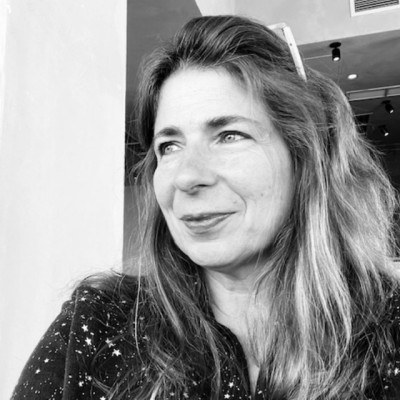
Principal Librarian, Research & Special Collections
01
Problem
Decades of stalled oral history attempts, undone by recording gear, tape rewinding, and hand transcription staff didn't have time for.
02
Goal
A lasting, institution-wide program covering community, staff, and donor stories, plus stewarding other organizations' collections.
03
Solution
Three interview tracks, in-library podcast rooms or remote Zoom, MOUs with partner orgs, and ~20 peer-recruited interviewers.
04
How TheirStory helped
Remote or in-person recording, 95%+ accurate auto-transcription, AI indexing, and dedicated project folders for partners.
Los Angeles Public Library has been collecting oral histories, on and off, since 1991. That year, photo manager Carolyn Cole noticed the library's image collection didn't reflect the full range of communities in Los Angeles, and started community collecting alongside a small set of interviews, about a dozen in all, that became the Shades of LA collection. A Boyle Heights oral history project followed years later: six interviews centered on the 1940s and '50s. Each effort ran into the same wall. "You had to press rewind, and then you'd have to do all of the transcription work," says Ani Boyadjian, research and special collections manager at Central Library. "So it took a really, really long time to get an oral history together."
The turn came from an unrelated project. During the pandemic, a librarian noticed a piece of artwork taped to a pole on her walk around the block and pitched an idea: a Los Angeles COVID-19 Community Archive, collecting the images of that moment, people in line at Costco for toilet paper, artwork of empty Trader Joe's shelves. The archive got written about, and TheirStory's team reached out to a colleague in the library's engagement and learning division, who brought it to Boyadjian. LAPL signed on with a starter package. Today it's a foundational partner.
Since we've been using TheirStory, it's just removed that barrier so that we could overcome the other hurdles and barriers that happen in the library, which is staff bandwidth and resources. — Ani Boyadjian, Research and Special Collections Manager
Once the recording and transcribing stopped being the obstacle, Boyadjian organized the program around three areas: community stories, institutional stories from the "brain trust" of retired and soon-to-retire staff who hold Central Library's history in their heads, and archival stories, interviews with people donating personal collections about why they chose a public library to hold them.
Many interviews happen in the library's own podcast rooms inside the Octavia Lab makerspace. "It's audio only, and I think it's a lot less pressure when you're not on video," Boyadjian says. "Whenever I say, hey, do you want to do a Zoom call or do it in our podcast room? Guess which wins?" Automatic transcription, which she puts at better than 95 percent accurate, and interview support in Spanish, have let more staff run interviews themselves. Armenian transcription, she's found, still has a way to go.
That infrastructure let LAPL take on other institutions' collections, too. The library signed an MOU with LA Act Up to host nearly 100 of its 4K video interviews recorded with people living with HIV/AIDS since the 1980s; the group's members keep the rights until the last of them passes. LAPL also hosts the Markings Project, an intergenerational indigenous oral history effort led by the community organization Ola as part of a five-year Mellon grant, with more than 20 interviews recorded so far in languages including Oaxacan. "We're providing access to it," Boyadjian says of these partner collections. "There is really no question of ownership there."
The program grew the way Boyadjian expected: slowly, then not slowly. She started with informational sessions and a handful of curious staff. Roughly 20 librarians across the system now conduct interviews, most recruited by a colleague who'd already done one. "It's not me as a manager saying the oral history program is great," she says. "It's the person doing the interview who's reaching out to another librarian and saying, hey, this is really great."
The stakes of moving quickly have become concrete. Two long-serving librarians central to Central Library's history passed away before Boyadjian's team could interview them. Now, when a retired librarian in her nineties who lost her home in the Palisades fire couldn't get a Zoom call to work, the team is planning a drive to Oceanside instead.
As Central Library approaches its 100th anniversary, the program is expanding into patron testimonials about what the library means to them, and into a Mellon grant initiative that will send oral history kits into the community and revive LAPL's mobile memory lab. Interviews recorded through TheirStory feed the library's Aviary-powered digital collection site, and eventually Calisphere and the Digital Public Library of America. "I'm very proud that we brought TheirStory to the institution," Boyadjian says. "We've basically institutionalized our oral history program."
Whether you're a small archive, a large-scale library system, or anything in between, TheirStory can help streamline your workflow.
One platform for the entire journey from story to impact.